
As predicted, SaaS and AI security have entered a new phase.
For years, security teams focused on networks, endpoints, identities, and application APIs. Those layers still matter, but they no longer reflect how work actually happens. Today, nearly every meaningful interaction with SaaS applications and AI tools occurs inside the browser. That shift has quietly turned the browser into the most important source of security context in modern environments.
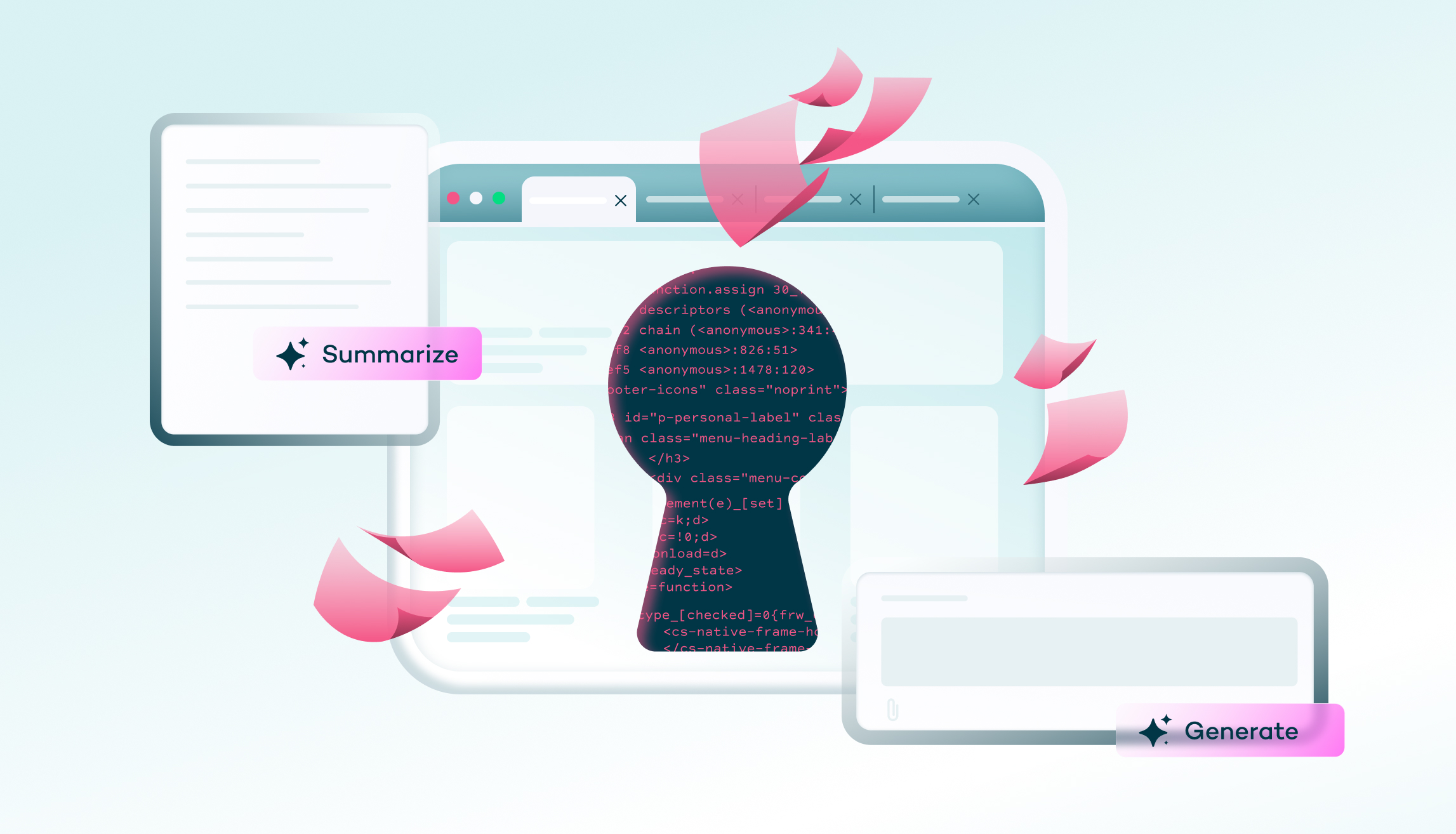
As SaaS usage expands and AI becomes embedded into daily workflows, the browser is no longer just an access point. It is where users authenticate, where sensitive data is accessed, where AI prompts are written, and where files are shared across systems. Without visibility at this layer, security teams are left with partial signals and delayed insight into real risk.
Starting now, effective SaaS and AI security programs will extend beyond APIs alone and incorporate browser-level insight to understand intent, misuse, and exposure as it happens.
The Browser is the Real Workspace for SaaS and AI
For most employees, the browser has become the operating system for work.
Customer data, financial records, source code, internal communications, and intellectual property all live inside SaaS applications accessed through browser sessions. AI tools are used in that same environment, often alongside sensitive business systems. Prompts are written, data is pasted, and files are uploaded directly from browser tabs.
This matters because sensitive data no longer sits quietly in storage or infrastructure layers. It moves dynamically within live browser sessions, flowing between SaaS applications and AI tools in real time. Traditional security controls were not designed to observe or govern this behavior at the moment it occurs.
As a result, many organizations have a growing gap between where security controls operate and where exposure actually happens.
Why API-Only SaaS Security Leaves Blind Spots
API-based SaaS security provides important posture and configuration visibility, but it shows an incomplete picture of risk.
APIs can reveal which applications are connected, how permissions are configured, and whether policies align with best practices. What they cannot consistently capture is how access is used once a user is authenticated.
API-only approaches don’t reliably detect:
- Data copied from SaaS applications into AI prompts
- Files uploaded from a browser session to unsanctioned tools
- Risky user behavior during active sessions
- Shadow SaaS and Shadow AI accessed directly through the browser
- Browser extensions that interact with page content or session data
These gaps are critical. Many of the most damaging SaaS incidents are driven by user behavior and unintended exposure, not by misconfiguration alone. Without browser-level context, security teams are forced to reconstruct events after the fact, often when the damage is already done.
AI Usage Has Made Browser-Level Security Non-Negotiable
GenAI has significantly raised the stakes for SaaS security.
Employees increasingly rely on AI tools through the browser to analyze data, summarize documents, generate content, and accelerate decision-making. In many cases, sensitive information is pasted directly into AI interfaces with limited understanding of where that data is processed or retained.
From a security and governance perspective, this introduces new and urgent risks:
- Sensitive business data shared with external AI services
- Prompts containing regulated or proprietary information
- AI tools operating outside approved governance frameworks
- Lack of visibility into how AI is actually used across teams
These risks originate at the moment of interaction, not after data is stored or logged elsewhere. Governing AI safely requires insight into real-time behavior inside the browser, where prompts are created and data moves.
Shadow SaaS and Shadow AI are Browser-Native Problems
Shadow SaaS and shadow AI adoption rarely begins with formal integration. It begins with a browser tab.
Users can discover and start using new SaaS applications, AI tools, and browser extensions without administrative approval. Authentication often happens with a private email address, bypassing procurement workflows, identity reviews, and API-based discovery.
Because these tools operate entirely within the browser, they frequently escape traditional visibility. Over time, they accumulate access to sensitive data and workflows without security oversight.
Browser-level visibility changes this dynamic. It allows organizations to see what users actually access and use, not just what is officially sanctioned. This is essential for identifying unsanctioned applications, unmanaged AI tools, and risky extensions before they introduce material exposure.
The Browser is the Missing Source of Security Context
What makes the browser uniquely valuable for SaaS and AI security is context.
The browser is where identity, application access, data movement, and user intent converge in real time. It provides signals that no other layer can offer on its own, including:
- Session-level user activity
- Real-time data movement between SaaS and AI tools
- User-driven actions such as copy, paste, upload, and share
- Browser extension behavior and injected scripts
- Access patterns across sanctioned and unsanctioned applications
This context enables security teams to distinguish normal work from risky behavior and to apply controls based on how access is actually used, not just how it is configured.
Without browser-level insight, zero trust principles stop at authentication and fail to account for what happens next.
Why the Browser Has Become a Core Control Plane for SaaS and AI Security
Modern SaaS and AI security programs are converging on a clear reality: one of the most meaningful risk signals lives inside the browser.
By incorporating browser-level visibility and enforcement, organizations can:
- Monitor SaaS and AI usage as it happens
- Apply data protection policies at the point of interaction
- Detect risky behavior before exposure escalates
- Govern AI usage with real behavioral context
- Extend zero trust principles into every active session
This doesn’t replace API-based posture management or identity governance. It completes them.
The browser connects posture, identity, data, and behavior into a unified view of SaaS and AI risk.
What this Shift Means for SaaS and AI Security Moving Forward
As SaaS environments continue to expand and AI becomes embedded across workflows, security strategies must align with how users actually work.
In 2026 and beyond, mature SaaS and AI security programs will combine:
- API-driven posture and configuration management
- Identity and entitlement governance
- Continuous risk detection and response
- Browser-level visibility and control
The browser is no longer a peripheral concern. It is the frontline where access is exercised and data is exposed.
Organizations that incorporate browser-level insight will gain the clarity needed to manage SaaS sprawl, govern AI responsibly, and reduce risk in real time. Those that do not will continue to operate with blind spots at the most active layer of their environment.
Securing the Browser Secures the Future of SaaS and AI
The browser has become one of the most important control points in modern SaaS and AI security. It’s where users authenticate, where data is handled, and where AI is actively used in day-to-day work.
Valence’s browser extension brings browser-level visibility into SaaS and AI security by capturing real session activity across sanctioned and unsanctioned applications. This browser context connects identity, permissions, data movement, and user behavior into a single, coherent view of risk. Security teams gain the insight needed to govern AI usage, reduce data exposure, and close blind spots that APIs and identity systems alone cannot address.
If you are evaluating how to extend SaaS and AI security into the browser, see how Valence uses browser-level context to deliver complete visibility and control across real-world SaaS and AI usage.